
While everyone is watching the slow bleed in BTC dominance, the real story is hiding in plain sight on a testnet. The eCash fork, slated for October 31st, is being framed as a 'free lunch' for Bitcoin holders. Ignore the headlines; watch the order book. This is not a technological breakthrough. It is a pure, unadulterated liquidity event, wrapped in the nostalgic narrative of Bitcoin's 'orthodox' inheritance. And in a bull market where euphoria masks technical flaws, it's a perfect trap for the unwary.
Let's get one thing straight from the outset. This is not a protocol upgrade in the sense that Taproot was. It's an asset replication fork. The project is creating a new token, ECX, by 1:1 mapping the entire Bitcoin supply to a new chain. The technical implementation is a shell game. The underlying Bitcoin network remains untouched. The only 'innovation' is the distribution mechanism. This is the financial engineering equivalent of a stock split, except the 'new shares' are trading on a separate, unproven ledger with a fraction of the security.
My own history with these events runs deep. In 2017, I watched the ICO bubble inflate on the promise of unproven tokenomics. I liquidated 70% of my positions before the regulatory crackdown, a decision that saved my capital while my peers were bleeding out. This eCash fork has the same fingerprints. It relies not on utility or sustainable yield but on the one and only commodity in crypto that truly matters: liquidity inflow. It's a test of whether a narrative can pull enough capital to validate its own existence.
The Context: A Slow-Motion Rollout
The project's timeline is a study in cautious, almost bureaucratic, engineering. We have a three-stage plan. An Alpha testnet is already live, and they're generating 'practice' tokens (pECX) to simulate the mainnet event. This is scheduled to be followed by a Beta phase on September 20th, with the mainnet fork locked for October 31st. On the surface, this seems prudent. It's a controlled demolition. But this is where I see the first cracks in the armor.
The integration guide, as of the August 11th cutoff, is still in a 'pre-release' state. Key parameters are not yet locked down. The final fork hash? Unclear. The exact software branch or tag? Pending. The replay attack protection scheme? Still under discussion. You are asking exchanges, miners, and everyday holders to prepare for a major event without the final blueprints. This is the kind of 'trust me, we'll figure it out' engineering that introduces systemic risk, and it's exactly why the market is choosing to watch rather than jump in.
The Japanese exchange announcements are telling. The likes of GMO Coin, Coincheck, SBI VC Trade, and Zaif have all issued continuity notices. They are keeping their Bitcoin services live, but they're conspicuously silent on any commitment to handle ECX. This is not a signal of support. This is the sound of risk managers hedging their bets. They are waiting for a clear, tested replay protection scheme before they even think about touching this asset. They know that a replay attack during the fork is the quickest way to trigger a liquidity crisis, which is a contagion that no exchange wants to be patient zero for.
Core Analysis: The Liquidity Trail
I want to dig into the mechanics of the replay attack risk because it’s the key to understanding the entire risk profile of this event. In a hard fork, the transaction history is shared. If an attacker can replay a transaction made on the Bitcoin mainnet onto the new eCash chain, they can potentially double-spend or cause chaos. The project is proposing to use selective nLockTime to prevent this. That's a viable technical solution, but it's not a simple one. It requires coordination from every single actor in the ecosystem: the core devs, the miners, the wallet providers, the exchanges.
Here is the core problem: the nLockTime parameter is not a default setting. It requires careful implementation on a per-transaction basis. If an exchange or a wallet doesn't have the final parameters integrated correctly, they could be vulnerable. The project has stated that the final solution will be announced later. That is unacceptable for a mainnet event with billions of dollars in collateral at stake. I've audited enough liquidity pools to know that the 'later' is where the bugs live.
This brings me to the token itself. ECX's supply is a 1:1 mapping of Bitcoin. This sounds fair and decentralized, no team allocation, no investor vesting. But it's a problem. The initial free float is enormous. The value of ECX is not derived from any intrinsic utility. It is not a governance token. It has no claim on any protocol fees. Its value is purely speculative, based on the collective belief that other actors will also believe it has value. That is the definition of a ponzi-like structure, the distribution is one-way, but the price is a pure measure of market sentiment.
The tokenomics is a straight copy. It is a vanity metric. A new token with the exact same supply and issuance schedule as Bitcoin. What is the point? It's not about solving a problem. It's about creating a new asset to trade. In the world of institutional capital, this is the kind of "asset" that gets quickly discounted. There's no net asset value. There's no underlying cash flow. There's only the narrative of the fork itself.
And this brings me to the "pECX" scheme. In the Alpha and Beta testnets, the team will generate pECX. The founder, Paul Sztorc, has said that 1,000 pECX can be swapped for 10 ECX on the mainnet. This creates a perception of scarcity and a reason for testnet participants to engage. But it also introduces a point of confusion. The exchange rate is arbitrary. It's a marketing tool. It doesn't change the fact that the total supply of ECX will be a 1:1 copy of BTC, making it a massive asset with a very thin order book.
The Decoupling Thesis: Why This Won't Mirror 2017
The crypto market has a short memory. We treat every fork like it's 2017 again, where any new token could get a parabolic run. But the market structure has changed. The ETF approval of 2024 changed everything. We are now in an institutional era. This is where my core contrarian thesis comes in.
The idea that this fork will create a new liquidity pool is a fallacy. We are not in a zero-sum game for attention. We are in a game for liquidity. Institutions don't care about eCash. They are going to look at a project with a pre-release integration guide and see a liability. They will not deploy capital into an asset that doesn't have a clear, audited technical path. The retail side is the same, but for a different reason. They are "FOMOing" on the next big thing, but they're also smart enough to see the "free lunch" is a trap.
The only way this succeeds is if it generates enough "airdrop hunter" activity. The initial price discovery will be a battlefield. Those who get the ECX will be the ones who are most likely to dump it immediately to take profit on "free money". This creates a massive sell-wall before the asset even has a chance to find a stable footing. I have seen this movie before. The "free gift" is often the most expensive asset you'll ever hold.
DeFi yields are traps, not gifts. And this fork is the ultimate "yield" — a free token. But it's a trap. The real yield is the arbitrage between the cost of managing the risk of the replay attack and the potential return. And in my calculation, the risk premium is too high.
Contrarian Angle: The Currency of Attention
The narrative is weak. We are in a market that has already seen Bitcoin Cash and Bitcoin SV. The "fork" narrative is old, and it's exhausting. The market is no longer interested in a new "Bitcoin killer" or a "true Bitcoin". The market is interested in utility. It's interested in AI-crypto convergence. It's interested in real-world asset tokenization. A pure asset fork has no place in that conversation.
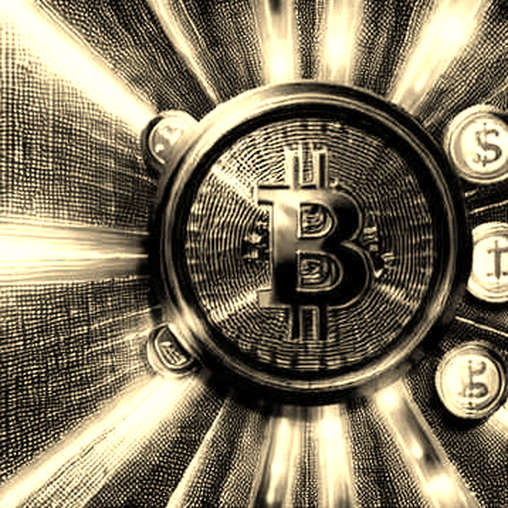
The only way this becomes relevant is if it is viewed as an infrastructure test. The successful execution of this fork could be seen as a proof-of-concept for future asset distribution mechanisms. But that's a low-confidence, long-dated narrative. It doesn't create immediate value for the token itself.
The project's governance is also a liability. The roadmap, the exchange ratio, the replay solution are all decided by a single person. There is no community governance. This is the kind of centralized decision-making that I would audit and flag as a red flag in any protocol. It means the project's fate is tied to the schedule of one individual. It doesn't have the institutional "stability" that a formalized council or a DAO would provide.
The Systemic Risk and the Takeaway
I'm not saying the fork will fail. The technical risk is not a high probability event. The project's staged approach to testing is a smart move. But the market risk is what I care about. The "free token" is a poison pill. It will attract speculators, not investors. And in this bull market, the entry of speculators into an asset with no fundamental backing is a dangerous signal.
The risk matrix is full of red flags. Replay attack risk is the highest, and it's not even the "what if" but the "when." The market has not yet priced in the operational friction that this event will cause. Exchanges are likely to remain silent, freezing ECX deposits for weeks after the fork. This will create a liquidity vacuum. And in the current market, where we are seeing a careful balance between bullish sentiment and macro headwinds, this vacuum can have a contagion effect.
The bottom line: Don't buy the token. Don't claim it unless you are a long-term holder of Bitcoin and you are comfortable with the operational risk. And if you are a long-term holder, the only thing you should do is wait. Watch the flow, ignore the noise. The noise is telling you this is a "free" asset. The flow tells you it's a liability with an unknown cost.
The October 31st fork is a test, not of the protocol, but of the market's maturity. Will it rush into a new asset because of the hype? Or will it wait, calculate the cost of the replay risk, the cost of the operational friction, and the cost of the illiquidity? In the institutional era, I'm betting on the latter. Speculation peaks when fundamentals peak. This fork has no fundamental peak. It's a liquidity event, and liquidity events are always settled in the end.
The signal to watch is not the price of ECX. It's the official announcement of the replay solution. Until that moment, any position is an unhedged bet on an unresolved technical variable.
Arbitrage closes; liquidity remains. And the arbitrage on this fork is too dangerous to chase. The smart capital is on the sidelines, auditing the code, watching the exchange announcements, and preparing for the only true opportunity: the post-fork clarity.